

Overview
- Rabies is a serious disease. It is caused by a virus.
- Rabies is a disease of mammals. Humans get rabies when they are bitten by an infected animal. The rabies virus infects the central nervous system, ultimately causing disease in the brain.
- The early symptoms of rabies in people are similar to that of many other illnesses, including fever, headache, and general weakness or discomfort. As the disease progresses, more specific symptoms appear and may include anxiety, hallucinations, increase in saliva, partial paralysis, and fear of water. Death usually occurs within days of the onset of these symptoms.
- Human rabies is almost always fatal.
- Wild animals – especially bats – are the most common source of human rabies infection in the United States. Skunks, raccoons, dogs, cats, coyotes, foxes, and other mammals can also transmit the disease.
- Although human rabies is rare in the United States, tens of thousands of people are vaccinated each year as a precaution after animal bites. Also, rabies is far more common in other parts of the world, with about 70,000 rabies-related deaths worldwide each year. Bites from unvaccinated dogs cause about 99% of these cases.
- Rabies vaccine can prevent rabies, even when given in the days after a bite from an infected animal.
- International Travel: Some travelers may need rabies vaccination before travel, depending upon where they plan to travel, what they plan to do, and for how long. It is important to consider whether the traveler will be able to access timely medical care if needed. A travel health specialist can help decide if rabies vaccine is recommended.
Rabies Vaccine Schedule
Anyone who has been bitten by an animal, or who otherwise may have been exposed to rabies, should see a doctor immediately. The doctor will determine if they need to be vaccinated. The vaccine is only routinely recommended before any exposure to rabies for people in groups at high-risk of exposure (for example, veterinarians, certain travelers, and people who are routinely exposed to bats).
RESOURCES
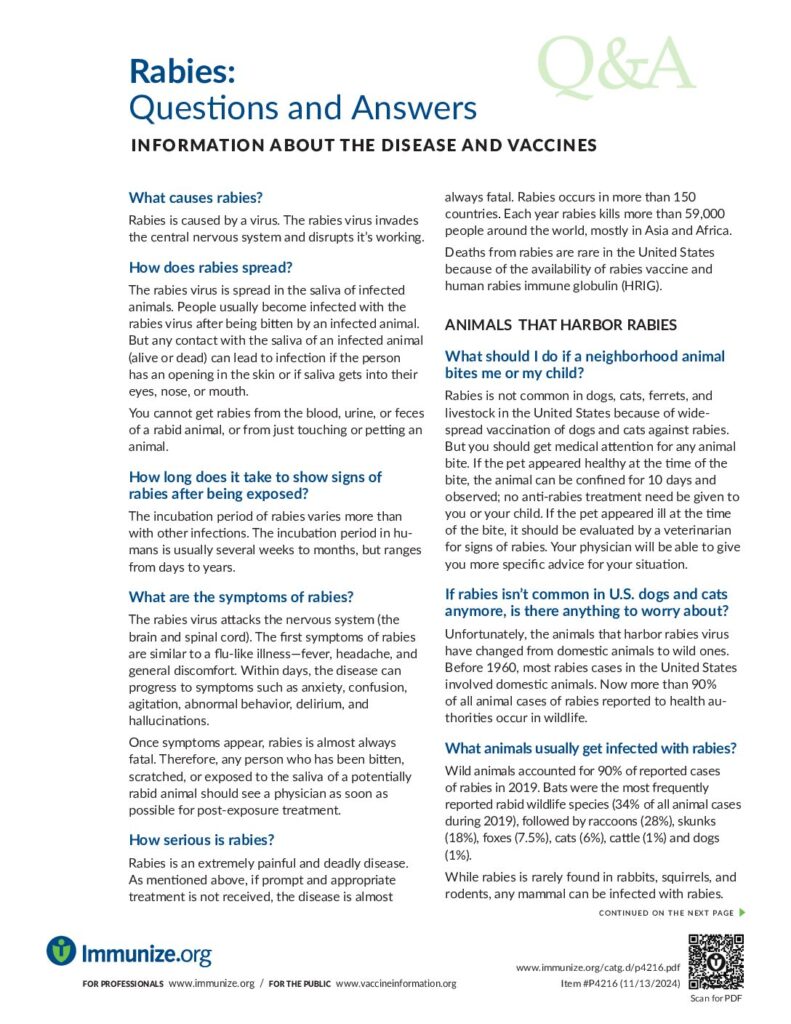
Rabies: Questions and Answers
Information about the disease and vaccines, from Immunize.org.
Partner Resources
General

Rabies information and resources from CDC:

Questions and answers about rabies and vaccines from the Vaccine Education Center at the Children’s Hospital of Philadelphia.
Travel
Access the rabies chapter of the CDC Yellow Book for travel-associated infections and diseases. This resource is intended for healthcare professionals, but its information is also useful for travelers.
CDC assessments of rabies status for individual countries.
Maps and information about rabies disease throughout the world.
Find health and vaccine information by selecting any country.
Search for public health and private clinics that administer travel vaccines. This list may not include all locations that provide travel vaccines.
Facilities that administer yellow fever vaccine are authorized to issue an International Certificate of Vaccination (the “yellow card”) to meet requirements for proof of yellow fever vaccination. These facilities typically offer a wide range of vaccines travelers may need.

What is Rabies?
Peter Costa provides information about how you can protect yourself, your pets and your community from Rabies; a deadly yet preventable disease. The series discusses how rabies is transmitted, which animals are most likely to be rabid, symptoms and diagnosis, prevention measures, World Rabies Day and medical advancements.
People of any age can feel a bit anxious about getting a shot. Some may be so anxious that they avoid vaccination…even when they know it’s important. Learn more about simple ways to help any child or adult feel better and more confident when getting vaccinated.