Var
Var Your child should receive 2 doses of chickenpox vaccine. The first dose should be given at 12–15 months, and the second dose at 4–6 years.
COVID-19 All infants need to be protected from COVID-19, beginning at age 6 months. Infants and very young children may need two or three doses. Vaccination needs to be repeated from time to time, either because vaccine protection wears off or because the vaccine needs to be updated in response to changes in the virus that causes COVID-19. Children who are immunocompromised may need more frequent doses.
DTaP/Tdap/Td Your child should receive 5 doses of DTaP. The first dose should be given at 2 months, the second dose at 4 months, the third dose at 6 months, the fourth dose at 15–18 months, and the fifth dose at 4–6 years.
HepA Your child should receive 2 doses of hepatitis A vaccine. The first dose should be given at age 1 year and the second 6-18 months later.
HepB Your child should receive 3 doses of hepatitis B vaccine. The first dose should be given at birth, the second dose at 1–2 months, and the third dose at 6-18 months. Sometimes children receive 4 doses of hepatitis B vaccine if they are receiving a combination vaccine.
Hib Your child should receive 3–4 doses of Hib vaccine (depending on the brand of vaccine). The first dose should be given at 2 months, the second dose at 4 months, the third dose at 6 months (if needed), and the last dose at 12–15 months.
Flu Every person, beginning at age 6 months and continuing throughout their lifetime, should receive yearly vaccination against influenza. Vaccination is the most effective step you can take to be protected from this serious disease. Children under the age of 9 years may need 2 doses. Talk to your child’s healthcare provider to find out if your child needs more than 1 dose.
MMR Your child should receive 2 doses of MMR vaccine. The first dose should be given at 12–15 months, and the second dose at 4–6 years.
MenACWY / MenB There are two different kinds of meningococcal vaccines. Meningococcal conjugate vaccine (MenACWY) is recommended for infants and children with certain health conditions. Meningococcal B vaccine (MenB) is recommended for children as young as 10 years with certain health conditions. Talk with your healthcare provider to find out if your child needs either of these vaccines. Starting at age 11, see Preteens for MenACWY recommendations. Starting at age 16 see Teens for MenB recommendations.
PCV / PPSV Children should receive 4 doses of PCV15 or PCV20 before age 2. Older children (through 4 years old) who were not vaccinated as infants need 1 or 2 doses of PCV15 or PCV20. Some children 2 years and older with certain health conditions may also need a dose of PCV20 alone or PCV15 followed later by PPSV. Pneumococcal vaccines are not recommended for healthy children 5 years or older.
IPV Your child should receive 4 doses of polio vaccine (IPV). The first dose is given at 2 months, the second dose at 4 months, the third dose at 6–18 months, and the fourth dose at 4–6 years.
RV Your child needs 2–3 doses of rotavirus vaccine (RV), depending on the brand of vaccine. The first dose is given at 2 months, the second dose at 4 months, and the third dose (if needed) at 6 months.
RSV / RSV-mAB RSV infection is the most common reason that infants are hospitalized. Infants younger than 8 months need to be protected from RSV during their first RSV season. They can be protected if their mother is given the RSV vaccine during pregnancy or if they get a dose of RSV preventive antibody after they are born. Certain children aged 8–19 months who are at high risk of severe RSV infection should get a dose of RSV preventive antibody before or during their second RSV season.
MMR Your child should receive 2 doses of MMR vaccine. The first dose should be given at 12–15 months, and the second dose at 4–6 years.
DTaP/Tdap/Td Your child should receive 5 doses of DTaP. The first dose should be given at 2 months, the second dose at 4 months, the third dose at 6 months, the fourth dose at 15–18 months, and the fifth dose at 4–6 years.
DTaP/Tdap Your child should receive 5 doses of DTaP. The first dose should be given at 2 months, the second dose at 4 months, the third dose at 6 months, the fourth dose at 15–18 months, and the fifth dose at 4–6 years.
RESOURCES
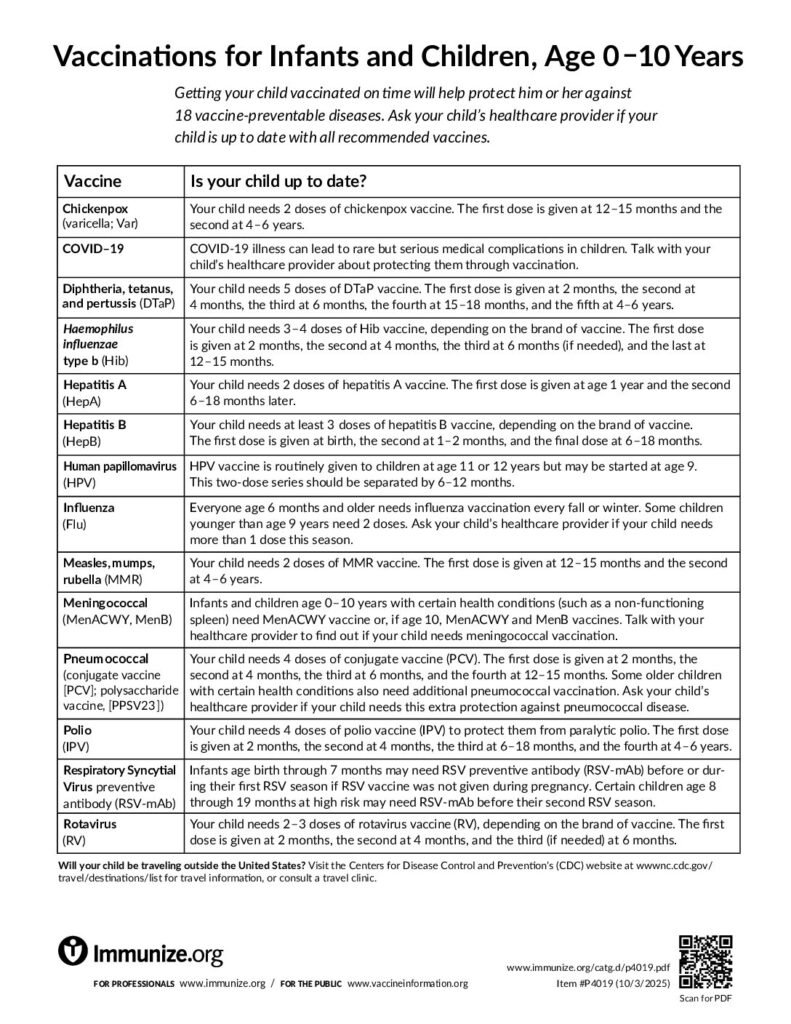
Vaccinations for Infants and Children, Age 0-10 Years
Listing and schedule for all vaccines recommended for children through age 10 years.
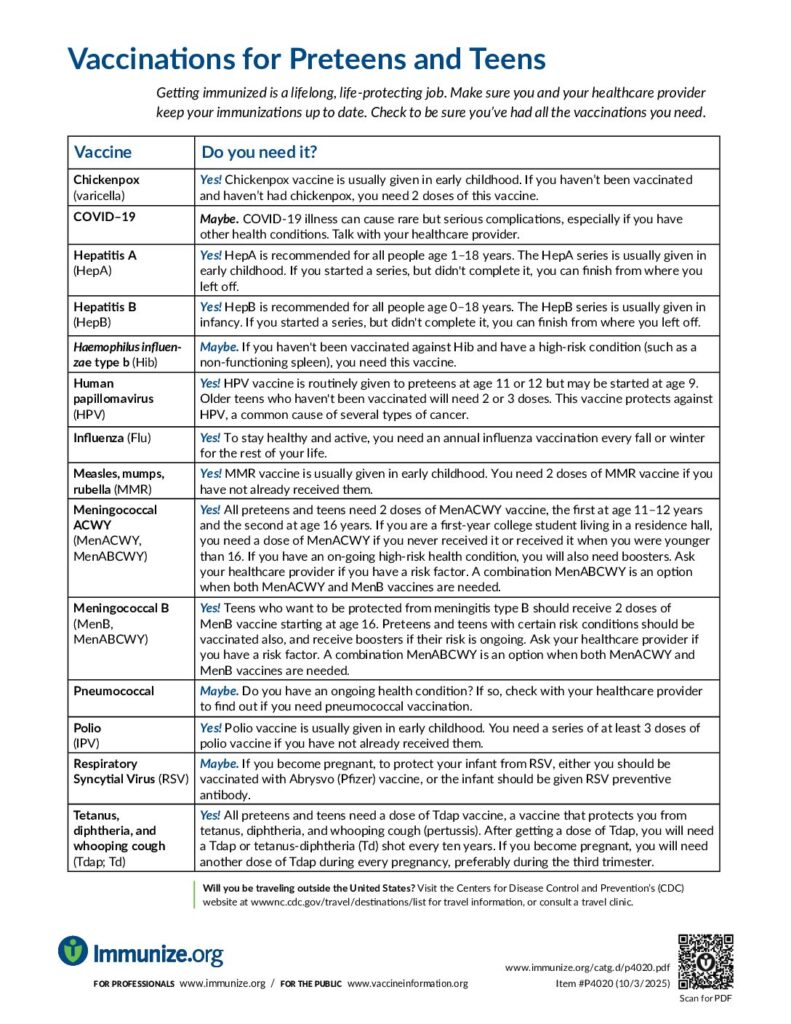
Vaccinations for Preteens and Teens
A list of all vaccines for preteens and teens and when (and if) they need each one.
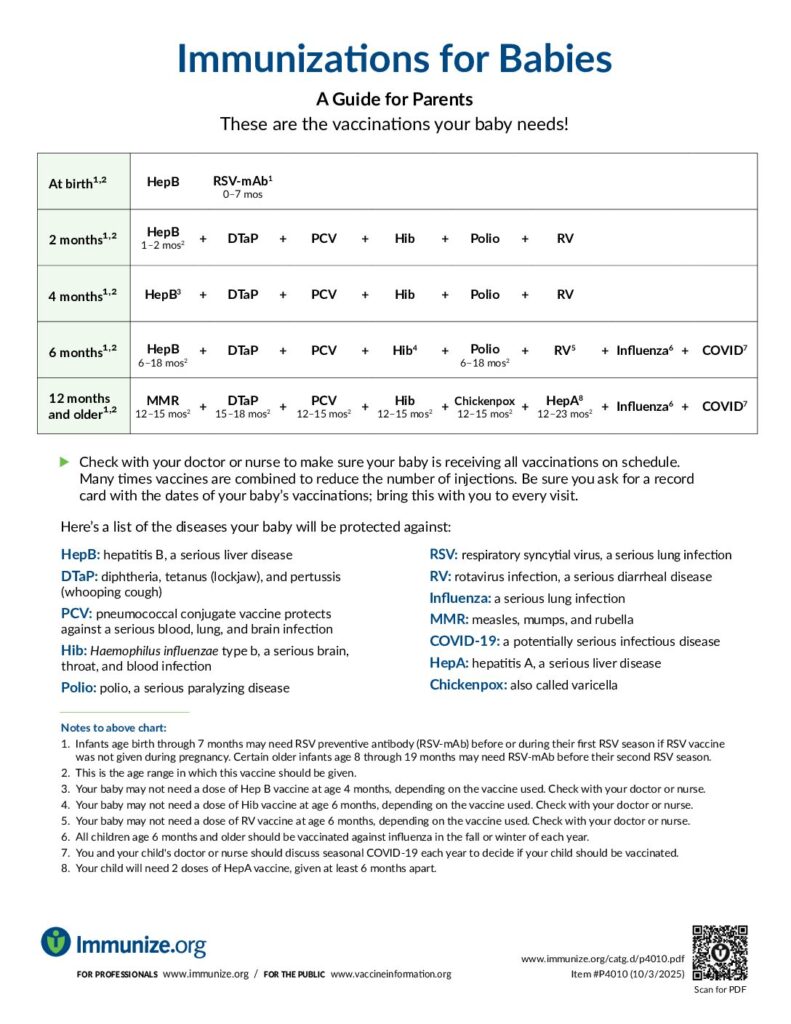
Immunizations for Babies—A Guide for Parents
Simplified version of the vaccine schedule for infants from birth through 18 months.
CDC Official Schedule Information
Getting immunized is a lifelong, life-protecting job. Talk with your healthcare provider about which vaccines your child needs and when they should be vaccinated. For more information, check the recommended immunization schedules:
Vaccines are routinely available at doctors’ offices, health centers, and pharmacies. Special vaccination clinics are sometimes held at schools or other public locations. For more information see Where to Get Vaccinated.