|
Questions & Answers
Click
here for a
fully formatted PDF version of these Qs & As.
When did the first hepatitis A vaccine first
become available?
There are currently two hepatitis A vaccine products approved by the FDA in the
United States. The first hepatitis A vaccine became available in 1995 (HAVRIX®),
followed by the second hepatitis A vaccine in 1996 (VAQTA®). They are equally
safe and effective.
What kind of vaccine is hepatitis A vaccine?
Hepatitis A vaccine is an inactivated virus vaccine. No part of the vaccine is
"live."
How is hepatitis A vaccine given?
The vaccine is given by an injection into the muscle of the upper arm for adults
and older children and in the thigh muscle of toddlers.
Who should get this vaccine?
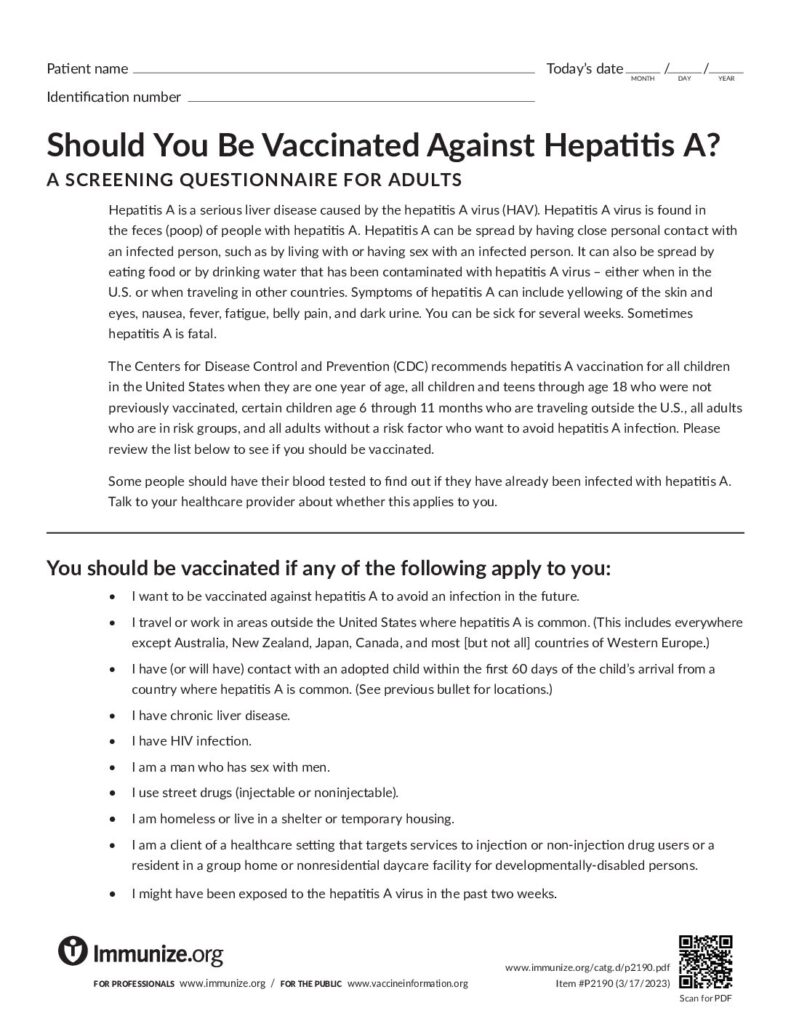
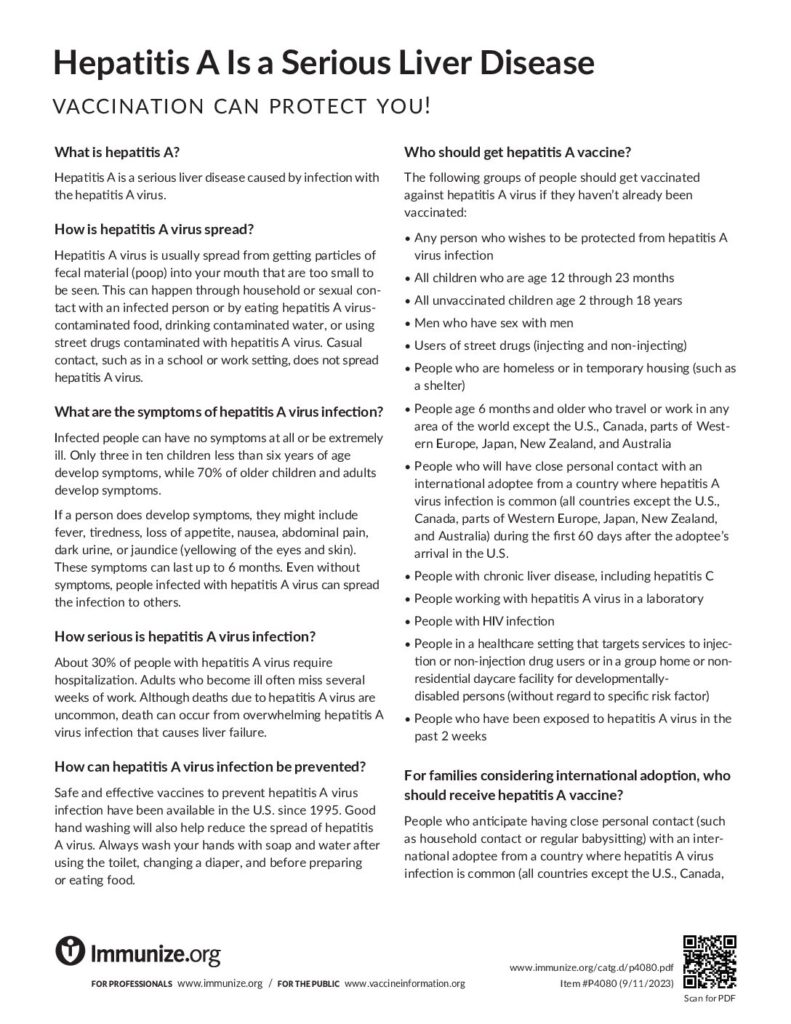
Many people are recommended to receive hepatitis A vaccine, including people at
increased risk for exposure to HAV infection and people who are more likely to
get seriously ill if infected with HAV. According to CDC recommendations, people
who should be vaccinated include:
- All children at age 1 year (12-23 months)
- People age 12 months or older who are
traveling to or working in an area of the world except the United States,
Canada, Western Europe, Japan, New Zealand, and Australia
- Men who have sex with men
- Users of illegal drugs, both oral and
injecting
- People who have blood clotting disorders
- People who work with HAV-infected primates or
with HAV in a research laboratory setting (no other groups have been shown to
be at increased risk for HAV infection because of occupational exposure)
- People with chronic liver disease
- Any person who wishes to be immune to
hepatitis A
Hepatitis A vaccine is not routinely recommended
for healthcare workers, sewage workers, or daycare providers. Children who are
not vaccinated by age two years should be vaccinated as soon as feasible.
How many doses of hepatitis A vaccine are
recommended for full protection?
Two doses are recommended. The second dose is given no sooner than six months
after the first dose.
I'm not in a group for which hepatitis A
vaccine is recommended. Can I still get vaccinated to protect myself against HAV
infection?
Yes. Hepatitis A vaccine is safe and effective and is licensed for use in any
person age 12 months and older.
How long does hepatitis A vaccine protect you?
Estimates for long-term protection for fully vaccinated people (i.e., full
two-dose series) suggest that protection from HAV infection could last for at
least 25 years in adults and at least 14-20 years in children. Experts continue
to study the long-term effectiveness of this vaccine to determine whether a
booster dose will be needed.
What organizations recommend hepatitis A
vaccine?
The Centers for Disease Control and Prevention, the American Academy of
Pediatrics, the American Academy of Family Physicians, the American College of
Obstetricians and Gynecologists, and the American College of Physicians.
Is hepatitis A vaccine safe?
Yes, hepatitis A vaccine is very safe. No serious adverse events have been
attributed definitively to hepatitis A vaccine. Since the licensure of the first
hepatitis A vaccine in 1995, millions of doses of hepatitis A vaccine have been
distributed and administered worldwide as well as in the United States.
What side effects have been reported with this
vaccine?
The most common side effect is a sore arm, which happens to one out of two
adults and one out of five children. Less common side effects include headache,
loss of appetite, low-grade fever, or tiredness. When these problems happen,
they usually start 3-5 days after vaccination and usually last for one or two
days. A very rare but serious side effect is a generalized allergic reaction. If
this happens, it typically occurs within a few minutes to a few hours following
the injection.
How effective is hepatitis A vaccine?
Hepatitis A vaccine is very effective. It appears that all adults, adolescents,
and children become immune to HAV infection after getting two doses. After one
dose, at least 94 out of 100 people become immune for the short term. For
example, a first dose of hepatitis A vaccine given prior to departure should
provide protection from HAV infection on a two-month trip to a high- or
intermediate-risk country.
Who should not receive hepatitis A vaccine?
People who have had a serious allergic reaction to hepatitis A vaccine in the
past, or who are known to be allergic to any part of the hepatitis A vaccine,
should not receive it. People with moderate or severe acute illness should wait
to receive hepatitis A vaccine until their condition has improved.
Can I receive hepatitis A vaccine when I am
pregnant?
The answer to this question is not well studied, but because hepatitis A vaccine
is produced from inactivated HAV, the theoretical risk to the developing fetus
is expected to be low. The risk associated with vaccination, however, should be
weighed against the risk for hepatitis A in women who may be at high risk for
exposure to HAV.
Can the vaccine cause HAV infection?
No.
Is there a vaccine that protects against both
HAV and HBV infections?
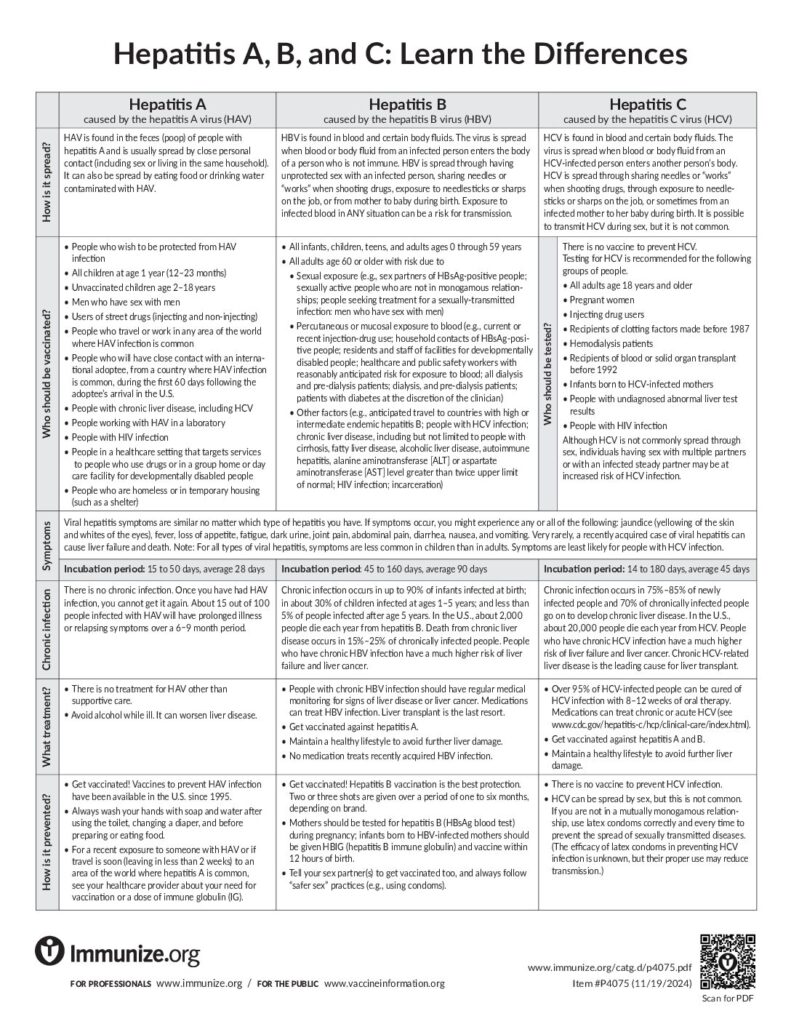
Yes. Twinrix®, the hepatitis A and hepatitis B combination vaccine manufactured
by GlaxoSmithKline, was licensed for use in the United States in 2001 for people
18 years of age and older. Three doses of Twinrix® are necessary for full
protection against hepatitis A and hepatitis B virus infections.
In April 2007, approval was received for an
alternate 4-dose schedule for Twinrix®. Using this schedule, 3 doses of Twinrix®
can be administered at 0, 7, and 21-30 days, followed by the 4th dose at 12
months. This schedule might benefit people needing rapid protection from both
hepatitis A and hepatitis B virus infections. This includes people traveling to
areas with high rates of hepatitis A and hepatitis B and emergency responders,
especially those being deployed to disaster areas overseas. Again, this is
available only for people 18 years of age and older.
What is immune globulin (IG)?
IG is a preparation of antibodies that can be given before exposure to HAV for
short-term protection against HAV infection and to people who have already been
exposed to HAV. IG must be given within 2 weeks after exposure to HAV for
maximum protection.
Are there new recommendations for the use of
IG and/or hepatitis A vaccine prior to travel?
Yes. All susceptible people traveling to or working in countries except the
United States, Canada, Western Europe, Japan, New Zealand and Australia should
receive hepatitis A vaccine or IG before departure. (If traveling to the
Caribbean, people should consider getting hepatitis A vaccine or IG if travel is
to areas of questionable sanitation.)
For unvaccinated people ages 1 through 40 years,
the first dose of hepatitis A vaccine should be administered as soon as travel
is considered, actually anytime prior to travel. The second dose should be given
at least 6 months after the first dose.
For the best protection, individuals who are over
age 40, immunocompromised people (e.g., people with AIDS), and people with
chronic liver disease or other chronic medical conditions planning to travel in
2 weeks or less should receive the initial dose of hepatitis A vaccine and IG at
the same time. The second dose of the 2-dose hepatitis A vaccine series should
be given no sooner than six months after the first dose. This second dose is
needed to insure long lasting protection.
Travelers who choose not to get the hepatitis A
vaccine, who are less than 12 months old, or who are allergic to the vaccine
should be given IG only. The dosage of IG depends on how long you plan to be
traveling and how much you weigh.
What should be done for travelers who are
younger than age 12 months to protect them from HAV infection?
Recommendations have not changed for this age group as noted in the previous
question. IG is recommended for travelers younger than age 12 months because
hepatitis A vaccine is not licensed for use in this age group.
Can hepatitis A vaccine be given after
exposure to HAV?
Yes. The recommendations for the use of hepatitis A vaccine after exposure to
HAV have changed. People who recently have been exposed to HAV and who
previously have not had hepatitis A vaccine should be given a single dose of
hepatitis A vaccine (not the combination vaccine) or IG as soon as possible.
Hepatitis A vaccine is preferred for healthy people age 12 months through 40
years of age. For people over 40 years of age, IG is preferred, but hepatitis A
vaccine can be used if IG is unavailable. IG should be given to children younger
than 12 months of age, immunocompromised people, people who have diagnosed
chronic liver disease, and people for whom vaccine is contraindicated.
Should pre-vaccination testing be done before
getting the vaccine?
Pre-vaccination testing is done only in specific instances when controlling
costs is a concern. For example, testing could be done in people who were likely
to have had HAV infection in the past. This includes people who were born in
countries with high rates of HAV infection, people older than age 40 years, and
people who have clotting factor disorders and might have received blood
components in the past. The blood test that should be used is called total anti-HAV.
Questions and answers
about hepatitis A disease
This page was reviewed on May 5, 2008
Back to top
Back to hepatitis A index page
Back to vaccineinformation.org homepage
|