From the Immunization Action Coalition
Vaccine Information
for the public and health professionals


 Hepatitis A Disease

 
 Home
 
 www.immunize.org
 
Search   
 

Diseases / Vaccines

Anthrax
Chickenpox
Diphtheria
Hepatitis A
Hepatitis B
Hib
Human papillomavirus
Influenza
Measles
Meningococcus
Mumps
Pertussis
Pneumo/adult
Pneumo/child
Polio
Rabies
Rotavirus
Rubella
Smallpox
Tetanus
Zoster
 

Vaccination across the Lifespan


Vaccine Concerns


"Unprotected People"

  
Photos
 
Video Clips
 

Official Information


State Information


Links


About IAC


Contact IAC


Visit IAC


Click here to obtain the free Adobe Acrobat Reader, necessary for reading PDF files on this site.


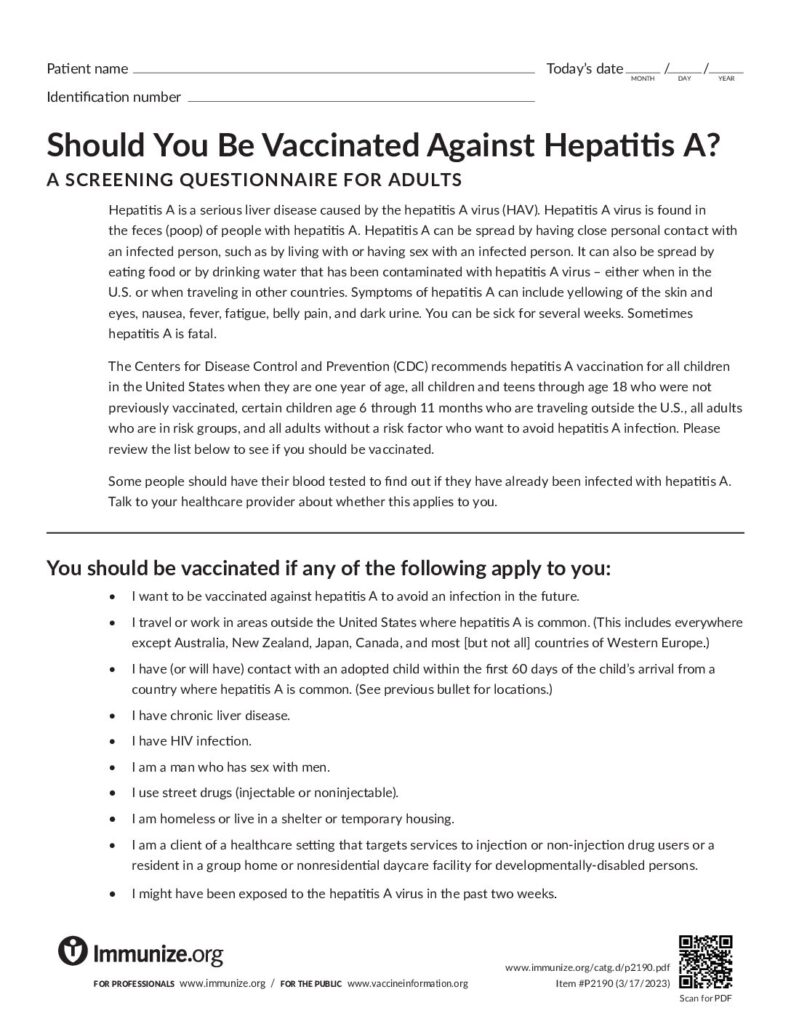
(click on image)


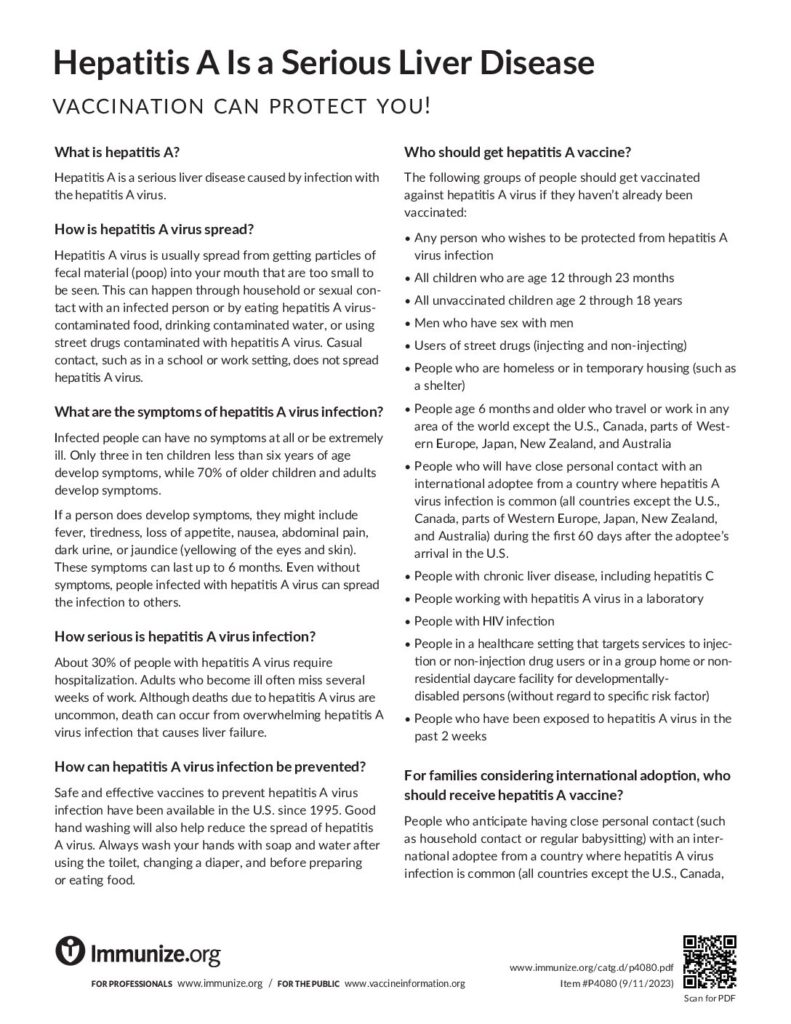
(click on image)


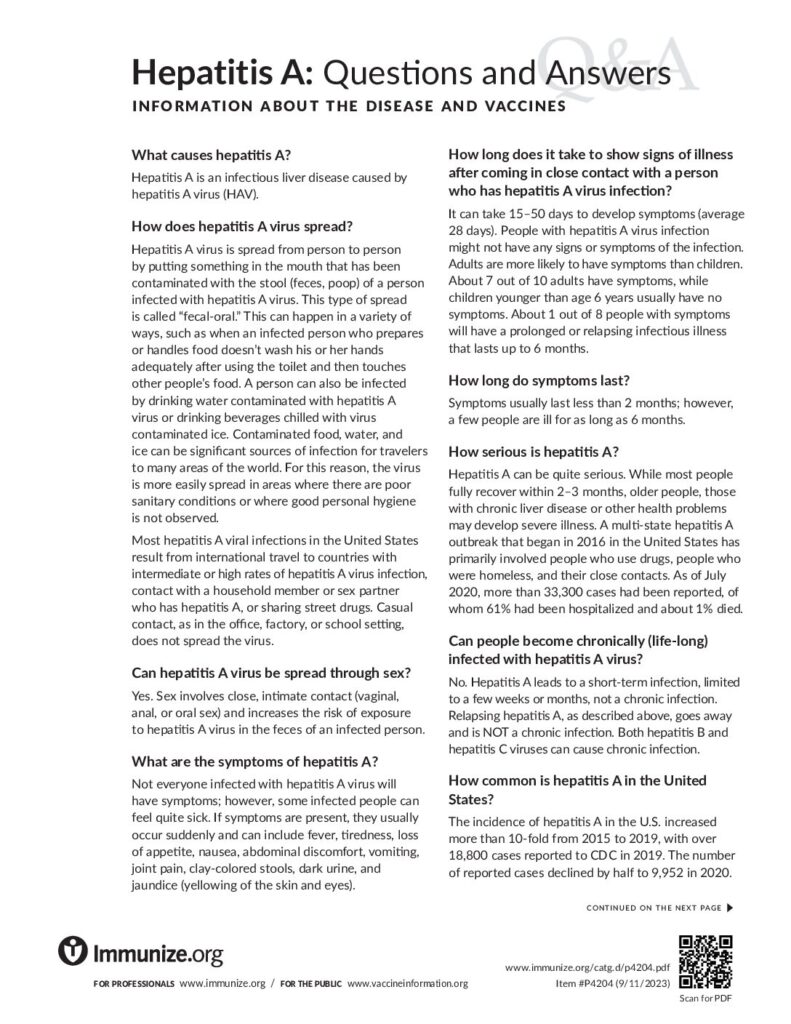
(click on image)


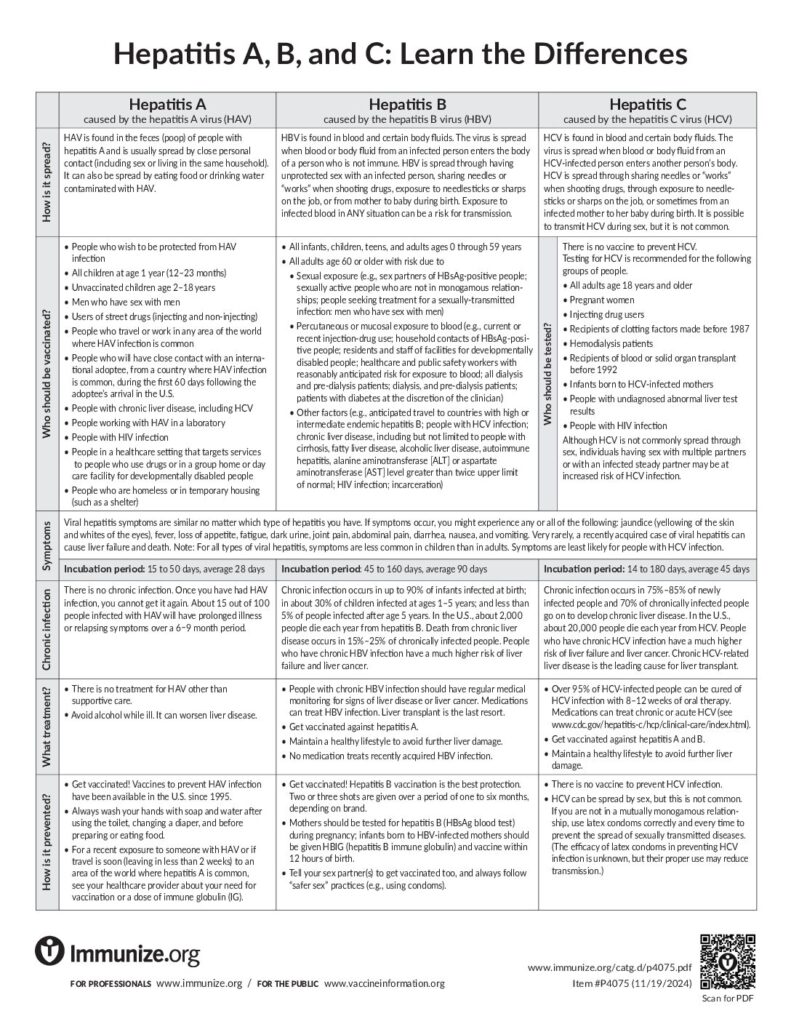
(click on image)


Questions & Answers

Click here for a fully formatted PDF version of these Qs & As.

What causes hepatitis A?
Hepatitis A is a liver disease caused by hepatitis A virus (HAV).

How does HAV spread?
HAV is spread from person to person by putting something in the mouth that has been contaminated with the stool of a person with HAV infection. This type of spread is called "fecal-oral." This can happen in a variety of ways, such as when an infected person who prepares or handles food doesn't wash his or her hands adequately after using the toilet and then touches other people's food. A person can also be infected by drinking water contaminated with HAV or drinking beverages chilled with contaminated ice. Contaminated food, water, and ice can be significant sources of infection for travelers to many areas of the world. For this reason, the virus is more easily spread in areas where there are poor sanitary conditions or where good personal hygiene is not observed.

Most infections in the United States result from contact with a household member or a sex partner who has hepatitis A; however the proportion of cases of hepatitis A among international travelers, illegal drug users, and men who have sex with men has been increasing. Casual contact, as in the usual office, factory, or school setting, does not spread the virus.

Can HAV be spread through sex?
Yes. Sex involves close, intimate contact (vaginal, anal, or oral sex) and increases the risk of exposure to HAV in the feces of an infected person.

What are the symptoms of hepatitis A?
People with hepatitis A can feel quite sick. If symptoms are present, they usually occur suddenly and can include fever, tiredness, loss of appetite, nausea, abdominal discomfort, dark urine, and jaundice (yellowing of the skin and eyes).

How long does it take to show signs of illness after coming in close contact with a person who has HAV infection?
It can take 15-50 days to develop symptoms (average 28 days). People with HAV infection might not have any signs or symptoms of the disease. Adults are more likely to have symptoms than children. About 7 out of 10 adults have symptoms, while children less than age 6 years usually have no symptoms. In some people, symptoms of hepatitis A recur in 6-9 months; this condition is called relapsing hepatitis A.

How long do symptoms last?
Symptoms usually last less than 2 months; however, a few people are ill for as long as 6 months.

How serious is hepatitis A?
Hepatitis A can be quite serious. Studies show that 33 out of 100 people with hepatitis A are hospitalized, with people over age 40 more likely to be hospitalized. Many days of work are missed due to hepatitis A, as well. Certain people, such as people with chronic hepatitis C, can get very sick and die from hepatitis A. Death from hepatitis A is fairly rare in young people who are otherwise healthy.

Can people become chronically infected with HAV?
No. HAV only causes acute (recently acquired) infection, not chronic infection. Relapsing hepatitis A, as described above, goes away and is NOT a chronic HAV infection. (Both hepatitis B and hepatitis C viruses can cause chronic infection.)

How common is hepatitis A in the United States?
In 2006, there were 3,579 acute cases of hepatitis A reported to the Centers for Disease Control and Prevention (CDC) and an estimated 32,000 new infections. The occurrence of HAV infection has been steadily decreasing over the past several years. Since the licensure of vaccines to prevent HAV infection, disease rates have fallen to the lowest level ever recorded in the United States.

How common is HAV infection throughout the world?
HAV infection occurs widely throughout the world. The infection is especially common in countries in Latin America, Africa, the Middle East, Asia, the Caribbean, and the Western Pacific. This means that people can become infected with HAV in many travel destinations, even when using luxury tourist accommodations. The only destinations around the world for which CDC does not recommend hepatitis A vaccination or immune globulin for U.S. travelers before departure are Canada, Western Europe, Australia, New Zealand, and Japan.

How does a person know if he or she is HAV infected?
To diagnose acute hepatitis A, a blood test called “IgM class antibody to HAV” (IgM anti-HAV) is needed. There is also a blood test available that shows if a person was infected with HAV in the past (total hepatitis A antibody [anti-HAV]). Talk to your doctor or someone from your local health department if you suspect that you have been exposed to HAV or any type of hepatitis virus.

Is there a medicine to treat hepatitis A?
There is no medicine that will treat or "cure" hepatitis A. Supportive care includes bed rest, fluids, and fever-reducing medicines. Take fever-reducing medicine only if your physician recommends it.

How long can a person with HAV infection spread HAV?
The most likely time for an HAV-infected person to spread HAV to others is during the two weeks before the infected person develops symptoms. Clearly, if a person doesn't even know that they are infected, it makes it difficult to protect others from getting the infection. The risk of spreading HAV becomes smaller over time and can still be present one week or longer after symptoms develop (e.g., yellowing of skin and eyes). Infants are more likely to be capable of spreading HAV for longer periods of time.

If a person has had close personal contact with an HAV-infected person and hasn't been vaccinated, what should the person do?
If an unvaccinated person thinks that he or she might have been exposed, that person should call their healthcare professional immediately to schedule an appointment to determine whether a real exposure has occurred and whether immune globulin (IG) and/or hepatitis A vaccine should be administered. IG is a concentrated dose of human antibodies that includes anti-HAV. In most cases, either of these preparations can protect an exposed person from developing HAV infection. It's important to give IG within two weeks following an exposure and hepatitis A vaccine as soon as possible after an exposure (the closer to the exposure the better). (See Q & A about "Hepatitis A Vaccine" for information about IG and hepatitis A vaccine and in which situations vaccine and/or IG is the best choice).

Can a person get infected with HAV more than once?
No. Once you recover from the infection, you develop antibodies called anti-HAV that provide life-long protection from future infections. After recovering from hepatitis A, you won’t get it again and you cannot transmit HAV to others.

How does HAV differ from hepatitis B virus (HBV) and hepatitis C virus (HCV)?

  • HAV, HBV, and HCV are three different viruses that attack and injure the liver and cause similar symptoms in people with acute (recently acquired) disease.
  • HAV is spread by getting HAV-infected fecal matter into a person’s mouth who has never had hepatitis A (e.g., an HAV-infected person who doesn’t wash his or her hands after using the bathroom and then handles food for public consumption or an infected person who has sex with a person who has never had hepatitis A). HBV and HCV are spread when an infected person's blood or blood contaminated body fluids enter another person's bloodstream.
  • HBV and HCV infections can cause lifelong (chronic) liver problems. HAV does not.
  • There are vaccines that will protect people from HAV infection and HBV infection. Currently, there is no vaccine to protect people from HCV infection.
  • There are medications that are approved by the Food and Drug Administration (FDA) for treatment of chronic HBV and HCV infections.
  • If a person has had one type of viral hepatitis in the past, it is still possible to get the  other types.

Questions and answers about hepatitis A vaccine

This page was reviewed on May 5, 2008


Back to top

Back to hepatitis A index page

Back to vaccineinformation.org homepage


Immunization Action Coalition
www.immunize.org
admin@immunize.org


Vaccine Information for the Public
and Health Professionals

www.vaccineinformation.org
admin@vaccineinformation.org


1573 Selby Avenue, Ste. 234
St. Paul, MN 55104
Tel: (651) 647-9009   Fax: (651) 647-9131