

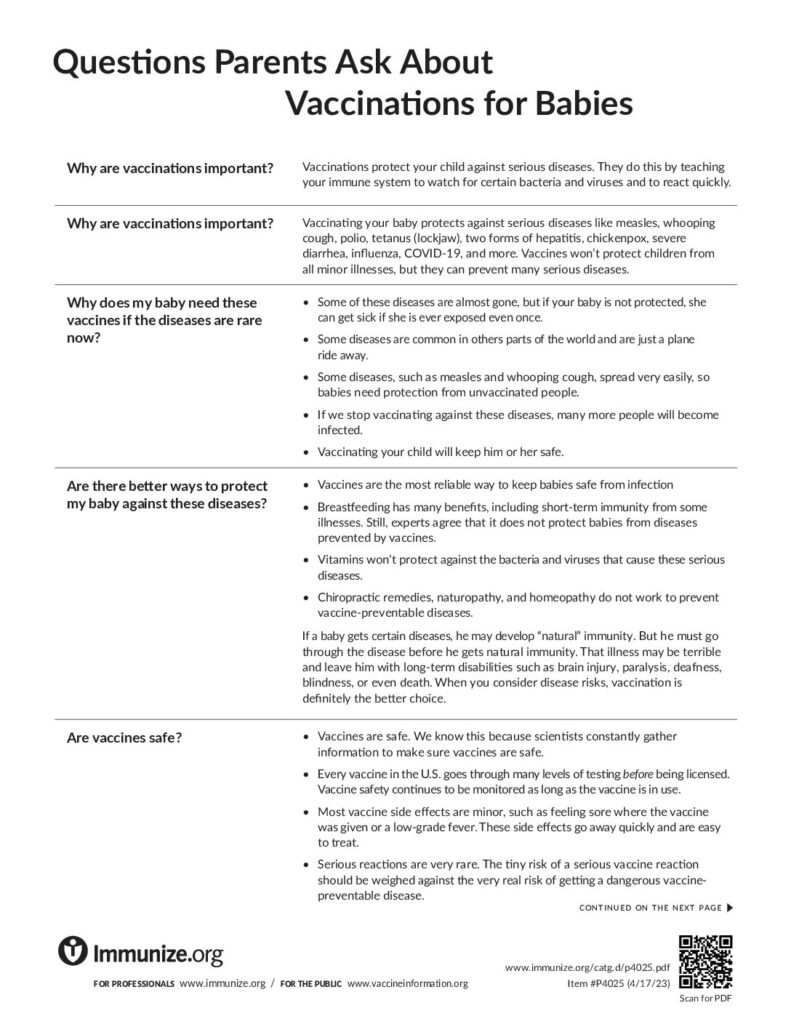
Vaccinations protect your child against serious diseases by stimulating the immune system to create antibodies against certain bacteria or viruses.
Immunizing your baby with vaccines protects against serious diseases like measles, whooping cough, polio, meningococcal disease, tetanus, rotavirus, hepatitis A, hepatitis B, chickenpox, influenza, and more. Your baby also may need to be immunized with a preventive antibody to protect them from RSV, a common respiratory infection that can be serious in young infants. Immunizations won’t protect children from minor illnesses like colds, but they can keep children safe from many serious diseases.
While a few of these diseases have virtually disappeared because of vaccination, reported cases of people with diseases like measles and whooping cough have been on the increase lately. Even if some diseases do completely disappear in the U.S., they are common in other parts of the world and are just a plane ride away. If we stop vaccinating against these diseases, many more people will become infected. Vaccinating your child will keep them safe.
No. Breastfeeding has many benefits and may offer some temporary immunity for certain illnesses, but experts agree that it is not an effective means of protecting a child from the specific diseases prevented by vaccines.
Likewise, vitamins won’t protect against the bacteria and viruses that cause these serious diseases. Chiropractic remedies, naturopathy, and homeopathy are totally ineffective in preventing vaccine-preventable diseases.
Some parents think that getting the “natural” disease is preferable to “artificial” vaccination, leading to a natural immunity. Some have even arranged chickenpox “parties” to ensure their child gets infected. It’s true that for some diseases, getting infected will lead to immunity, but the price paid for natural diseases can include paralysis, brain injury, liver cancer, deafness, blindness, or even death. When you consider the seriousness of these risks, vaccination is definitely the better choice.
Vaccines are safe, and scientists continually work to make sure they become even safer. Every vaccine undergoes extensive testing before being licensed, and vaccine safety continues to be monitored as long as a vaccine is in use.
Most side effects from vaccination are minor, such as soreness where the injection was given or a low-grade fever. These side effects do not last long and are treatable.
Serious reactions are very rare. The tiny risk of a serious reaction from vaccination has to be weighed against the very real risk of getting a dangerous vaccine-preventable disease.
Yes. Your child can still get vaccinated if they have a mild illness, a low-grade fever, or when taking antibiotics. Talk with your child’s healthcare provider if you have questions.
At least five visits are needed before age 2, but the visits can be timed to coincide with well-child check-ups. Your baby should get the first vaccine (hepatitis B) at birth, while still in the hospital. Multiple visits during the first two years are necessary because there are 15 diseases your baby can be protected against, and most require two or more doses of vaccine for the best protection.
Your healthcare provider should let you know when the next doses are due. For infants, most vaccinations are given on a 2, 4, and 6-month schedule. If you are not sure, call your healthcare provider’s office to find out when your child should return for vaccinations.
Doses cannot be given too close together or immunity doesn’t have time to build up. On the other hand, you don’t want to delay your child’s vaccinations and get behind schedule because, during this time, your child remains unprotected against these serious diseases.
No. If your baby misses some doses, it’s not necessary to start over. Your provider will continue from where they left off.
In many medical practices, your child’s immunization record is entered into an electronic record-keeping system. They may also be entered into a state immunization information system that can be accessed by other healthcare providers who take care of your baby. It’s important to keep home records too, so be sure to ask for a personal record card or a printed copy of your child’s vaccinations.
Bring your copy of the record to all medical appointments. Whenever your child receives a vaccine, make sure your copy gets updated. It’s a good idea to take a picture of it with your phone, if possible, just in case it is lost. Your child will benefit by having an accurate vaccination record throughout their life.
Also see Tips for Finding Vaccine Records, which includes printable vaccine records for adults and children.
Vaccinations are free or low-cost for all children and teens younger than age 19 years when families can’t afford them. Call your healthcare provider or local/state health department to find out where to go for affordable vaccinations. You can also access a listing of contact information for state immunization programs. Your child’s health depends on timely vaccinations.
Unvaccinated children and under-vaccinated children are capable of spreading the disease to other children, even those who have been vaccinated since no vaccine is 100% protective.
In the United States, there have been dramatic declines in vaccine-preventable diseases when compared with the pre-vaccine era. (see Vaccines Work! for examples). Vaccines have minimized or eliminated outbreaks of certain diseases that were once lethal to large numbers of people, including measles and polio in the United States, and smallpox worldwide. However, because the bacteria and viruses that cause diseases still exist, the public health gains achieved through vaccines can only be maintained by ensuring that vaccination rates remain high enough to prevent outbreaks.
Vaccines are effective not only because they protect individuals who have been vaccinated but also because they confer a broader protection for communities by establishing “community immunity.” When a sufficiently high proportion of a population is vaccinated against infectious diseases, the entire population may obtain protection.
Community immunity is critical for protecting the health of many groups of people who are especially vulnerable to communicable diseases: those who cannot be vaccinated, either because they are too young or because a medical condition makes vaccination too risky.
Vaccination is as important for adults as it is for children, and yet many adults are not optimally vaccinated. Adults need vaccines to protect them from diseases that could impact them due to their age, health condition, lifestyle, or occupation. Adults need vaccines because vaccine immunity (protection) may have diminished over time and a person will need a booster shot to enhance protection. For some diseases like whooping cough, adults who are vaccinated prevent the spread of disease and in turn, protect children. There are also vaccines, such as the shingles vaccine, that protect against diseases and conditions that develop in adults.
Check with your clinic or healthcare provider to see if they administer vaccines. Additionally, your state health department may administer vaccines to adults. Many pharmacies also offer immunizations to adults. Each fall, just before winter respiratory viruses begin circulating, special clinics may be held in grocery stores, senior centers, and other community settings to offer vaccines against winter respiratory virus infections, such as influenza, COVID-19, or RSV.
Vaccines are among the safest medicines available. Some common side effects are a sore arm or fever. There is a very small risk that serious problems could occur after getting a vaccine. However, the potential risks from the diseases are much greater than the potential risks associated with the vaccines.
Contact your doctor or your local health department as early as possible to find out which immunizations you may need. Vaccines against certain diseases are recommended when traveling to different countries.
The time required to receive all immunizations will depend on whether you need one shot or a series of shots. Visit CDC’s Travelers’ Health for up-to-date information on immunization recommendations for international travelers.
RESOURCES

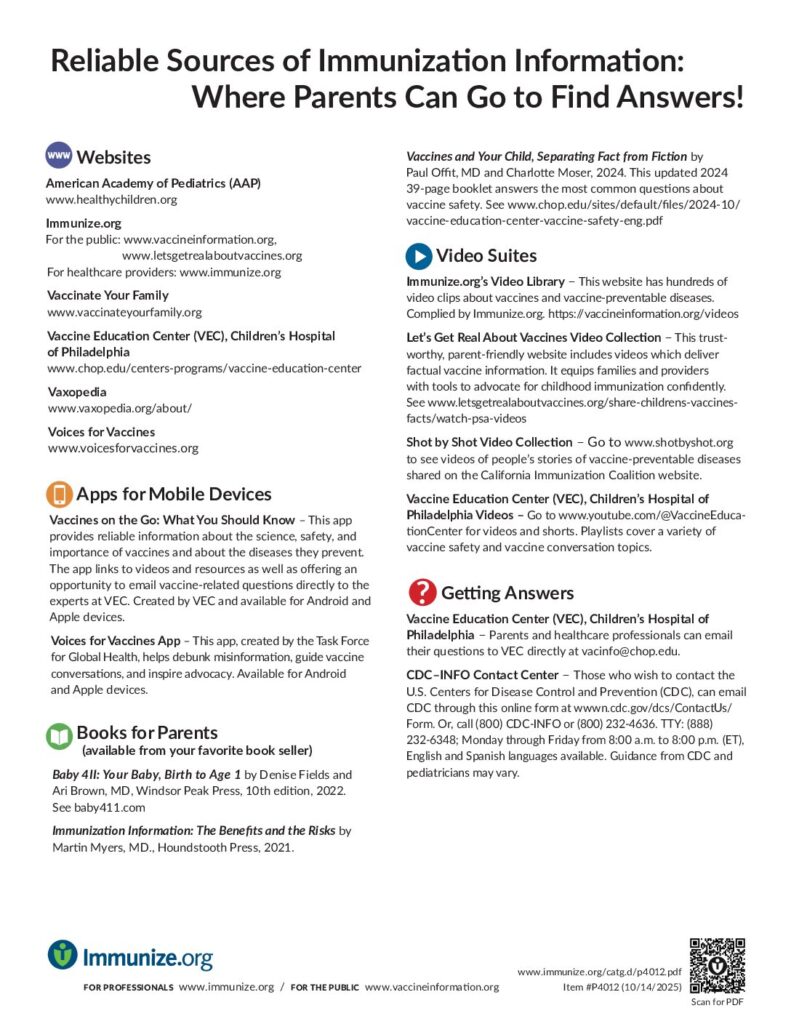
Reliable Sources of Immunization Information: Where Parents Can Go to Find Answers!
A list of websites, books, apps, videos, and who to contact.
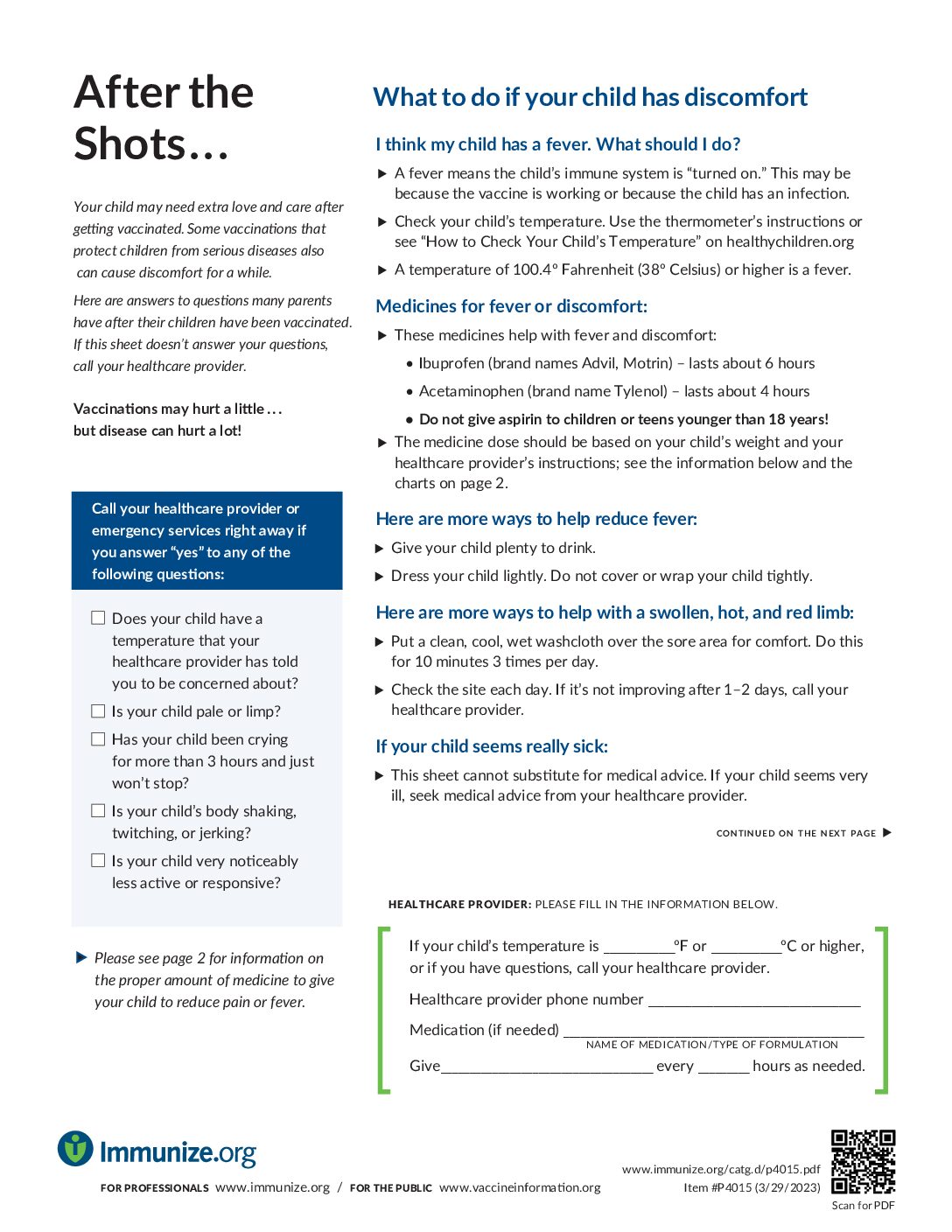
After the Shots … What To Do if Your Child Has Discomfort
Tips for parents, includes information about medication that reduces pain and fever.
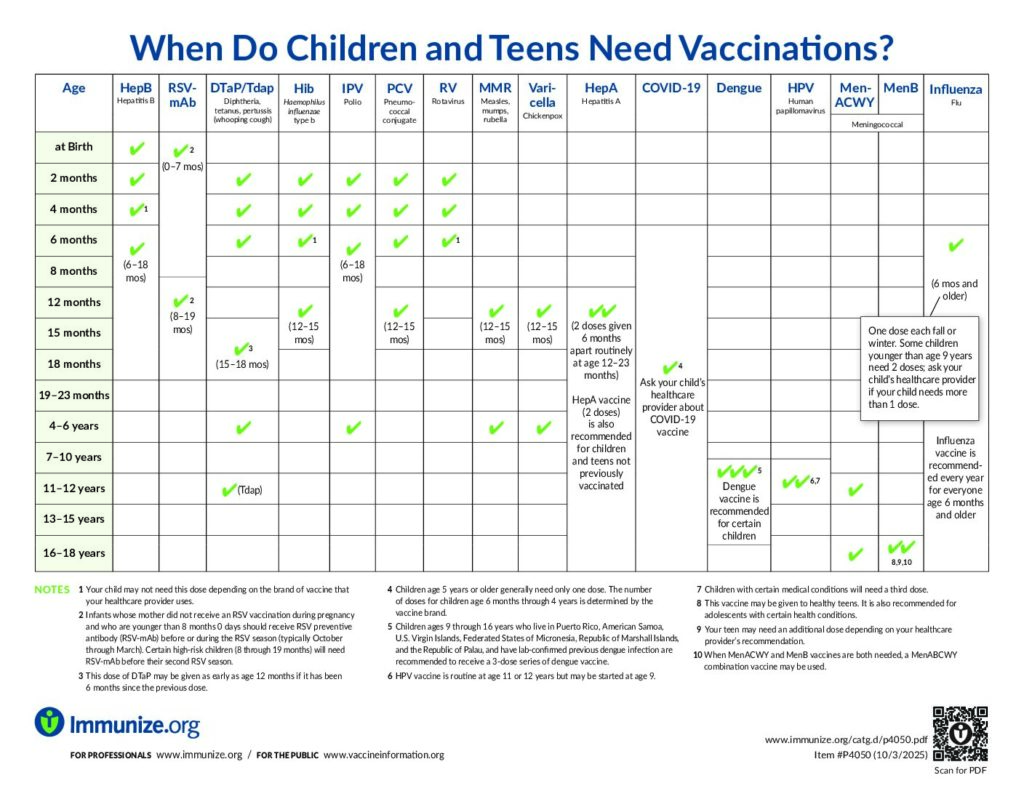
When Do Children and Teens Need Vaccinations?
A printable, easy-to-read chart of vaccines by age, birth through 18 years old.

The Immunization Baby Book
Parents have no greater joy than watching their child grow up happy and healthy. For this reason, most parents choose the safe, proven protection of vaccines. Flipping through this baby book, you will learn which vaccines babies need and why the CDC’s recommended immunization schedule is so important. Immunization gives you the power to protect your baby from 14 serious childhood diseases by age 2.